Choosing the right Modern Wood Veneer Paneling requires more than comparing colors online. Global buyers must examine grain direction, veneer thickness, core stability, surface finish, and installation conditions. A walnut panel may look rich under showroom lighting, yet appear darker beside a north-facing window. Small details matter.
Architect Frank Lloyd Wright said, “Wood is universally beautiful to man. It is the most humanly intimate of all materials.” His observation still guides responsible material selection. Modern wood veneer combines natural character with controlled manufacturing, making it suitable for offices, hotels, residences, retail spaces, and public interiors. However, beauty alone is not enough. Buyers should request physical samples, technical datasheets, emissions information, moisture guidance, and documented sourcing practices.
Performance varies.
This 2026 guide examines leading panel styles, wood species, finishes, acoustic options, and supplier considerations for international projects. It also considers production consistency, packaging quality, lead times, and communication across borders. Experienced buyers know that one sample cannot represent every production batch. That limitation deserves attention. Veneer matching may shift slightly, and real wood will continue changing with light and humidity.
A reliable decision balances appearance, durability, maintenance, and verified technical performance. It should also reflect the building’s climate and daily use. The best Modern Wood Veneer Paneling is not always the most dramatic option. Sometimes, a quieter oak surface performs better, ages more gracefully, and creates fewer regrets after installation.
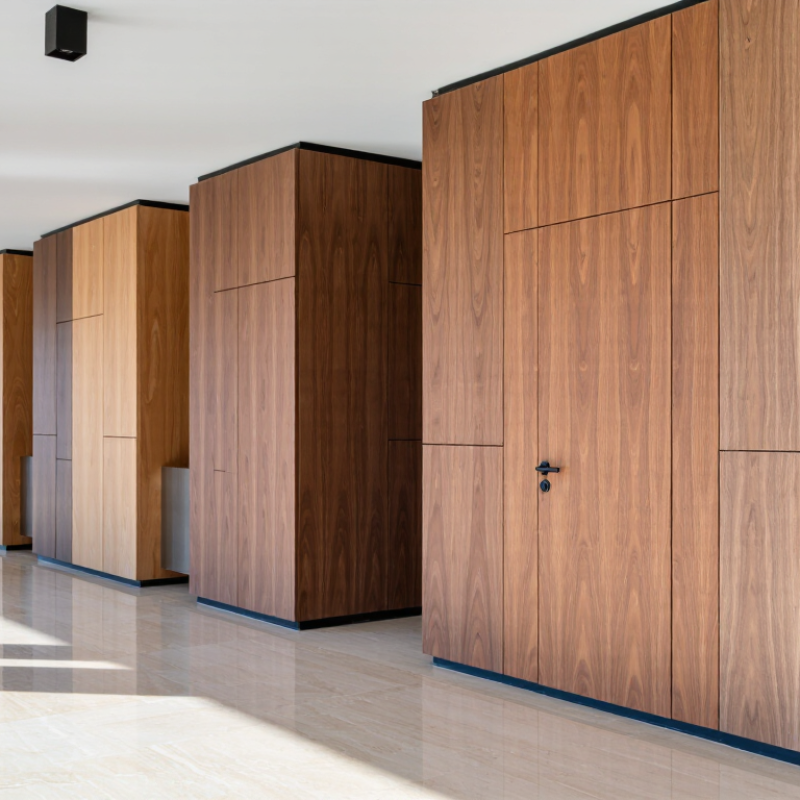
2026 Best Modern Wood Veneer Paneling for Global Buyers
Definition and Key Features of Modern Wood Veneer Paneling
Modern wood veneer paneling is a decorative wall or ceiling surface made from thin natural wood layers. These veneers are bonded to a stable substrate, such as plywood, MDF, or another engineered board. The result provides real wood character with better material efficiency than solid timber. Grain direction, tone, pores, and light reflection create a warmer interior than painted surfaces.
Key features include precise panel sizing, concealed joining systems, acoustic backing, and low-emission adhesives. Many panels also offer fire-performance documentation, moisture guidance, and installation instructions for different climates. Global buyers should check substrate quality, veneer thickness, edge treatment, and packaging protection. A humid shipment can affect panel stability. I have found that even excellent panels may show slight color variation between samples and delivered batches. That is natural, but it should be clearly discussed before purchasing.
Tips: Request a physical sample before approval. Compare it under daylight and warm lighting. Confirm the panel’s dimensions, installation method, maintenance needs, and local compliance documents. Leave suitable expansion gaps during installation. Small details matter. A beautiful veneer can still fail when the wall is damp or uneven.
| Data Dimension | Definition or Typical Specification | Key Features for Global Buyers | Buyer Considerations |
|---|---|---|---|
| Product Definition | A decorative interior panel made by bonding a thin layer of natural wood veneer to a stable substrate such as medium-density fiberboard, plywood, or another engineered wood panel. | Provides the appearance of real timber while using less solid wood than a full-thickness wood board. It can be supplied as flat panels, slatted panels, acoustic panels, or three-dimensional wall systems. | Confirm the veneer type, substrate composition, adhesive system, panel construction, and intended interior application before ordering. |
| Common Veneer Species | Frequently used species include oak, walnut, ash, maple, birch, teak, and eucalyptus. Availability varies by region and harvest regulations. | Different species provide distinct grain patterns, colors, hardness, and aging characteristics. Natural veneer generally displays authentic grain variation from panel to panel. | Request species, cut type, grade, grain direction, color range, and a physical sample. “Natural wood look” may also refer to reconstituted or printed finishes. |
| Veneer Thickness | Decorative veneers are commonly about 0.5–1.0 mm thick, while thicker engineered or face veneers may be specified for particular applications. | Thicker veneers can offer greater sanding or refinishing potential, while thin veneers help reduce material consumption and product weight. | The stated thickness should identify whether it is nominal or actual and whether it includes backing material, fleece, or paper reinforcement. |
| Typical Panel Thickness | Common finished panel thicknesses are approximately 6–25 mm, depending on the substrate, mounting method, acoustic backing, and design profile. | Slim panels suit decorative wall cladding, while thicker panels can improve rigidity, impact resistance, or acoustic performance. | Check tolerances, edge treatment, cut-outs, and the additional depth created by battens, rails, or acoustic backing. |
| Typical Panel Dimensions | Common formats include approximately 2,400–3,000 mm in length and 600–1,220 mm in width, although made-to-order dimensions are also available. | Large-format panels can reduce visible joints, while modular widths simplify handling, transport, and replacement. | Compare metric and imperial dimensions, container loading efficiency, allowable dimensional tolerances, and local installation access. |
| Substrate Options | Typical substrates include MDF, moisture-resistant MDF, plywood, and acoustic fiberboard. The substrate influences strength, weight, machining, and emissions. | MDF offers a smooth face for veneering; plywood can provide improved screw-holding and structural stability; acoustic fiberboard supports sound-absorbing designs. | Select the substrate according to humidity, fixing method, load requirements, indoor-air-quality rules, and fire-performance requirements. |
| Surface Finish | Common finishes include clear lacquer, matte coating, oil, wax, UV-cured coating, stained finish, and unfinished veneer for on-site treatment. | Finishes can emphasize grain, control sheen, improve stain resistance, and simplify routine cleaning. | Ask for gloss level, abrasion resistance, repair method, maintenance instructions, and whether the coating is suitable for the target market. |
| Moisture Content | Wood-based panels are commonly manufactured for interior conditions with moisture content often around 6–10%, but the correct range depends on climate and product construction. | Proper moisture conditioning helps reduce swelling, shrinkage, open joints, veneer cracking, and warping after installation. | Condition panels at the installation site according to the supplier’s instructions. Avoid direct exposure to rain, standing water, and uncontrolled humidity. |
| Acoustic Performance | Slatted or perforated veneer panels with mineral wool, polyester, or wood-fiber backing can absorb reflected sound; performance depends on the complete wall assembly. | Useful for offices, hospitality spaces, educational interiors, restaurants, and residential rooms where reverberation control is required. | Request tested sound-absorption data such as NRC or αw only when relevant, and verify the test method, mounting system, cavity depth, and backing material. |
| Fire Performance | Fire reaction depends on the veneer, substrate, coating, thickness, joints, and installation system. Classification systems differ between regions. | Fire-retardant treatments or tested panel assemblies may be required for public, commercial, transportation, or high-occupancy projects. | Do not rely on a generic “fire-rated” claim. Obtain a valid test report or classification certificate for the exact panel and mounting assembly. |
| Indoor Air Quality | Emissions are influenced by the substrate and adhesive. Relevant requirements may include formaldehyde emission limits under regional regulations. | Low-emission boards and water-based or low-emission coatings can support healthier interior environments when properly documented. | Request current laboratory reports and confirm that the test standard is accepted in the destination country or project specification. |
| Sustainability Documentation | Potential documentation includes legal timber declarations, chain-of-custody records, recycled-content information, environmental product declarations, and lifecycle data. | Efficient veneer use can reduce demand for solid timber, while responsible sourcing and durable finishes may improve the product’s environmental profile. | Verify the scope, certificate holder, product coverage, validity period, and destination-market requirements rather than accepting unsupported environmental claims. |
| Installation Methods | Panels may be installed with clips, screws, adhesive, mechanical rails, or a combination of fixing methods. Slatted systems often use battens or acoustic backing. | Concealed fixing can create a clean modern appearance, while mechanical systems may make future removal and replacement easier. | Check wall flatness, expansion gaps, corner details, electrical access, compatible adhesives, and installer qualifications before site delivery. |
| Recommended Applications | Suitable applications commonly include feature walls, ceilings, reception areas, offices, hotels, retail interiors, meeting rooms, and residential living spaces. | Offers a warm natural appearance, coordinated visual systems, and design flexibility across contemporary and traditional interiors. | Use only products specifically rated for high humidity, wet areas, exterior exposure, or heavy-impact locations when those conditions apply. |
| Quality-Control Checklist | Inspect veneer matching, color consistency, surface defects, edge quality, panel flatness, dimensions, packaging, moisture protection, and documentation. | A pre-shipment sample approval and batch inspection can reduce variation-related disputes in international projects. | Define acceptance criteria in the purchase contract, including allowable color variation, repair limits, dimensional tolerances, replacement policy, and packaging requirements. |
Note: Specifications are typical market ranges for interior wood veneer paneling. Actual performance must be confirmed through the technical data sheet, test reports, installation instructions, and regulations applicable to the destination market.
It is a decorative wall or ceiling surface made from thin natural wood layers. The veneer is bonded to plywood, MDF, or another stable engineered core. It offers real wood character with more efficient material use than solid timber.
Check the core material, veneer thickness, panel dimensions, edge treatment, and packaging protection. Ask for technical sheets and a physical sample. Photographs are not enough.
Natural wood varies in grain, tone, pores, and light reflection. Different logs can create slight batch differences. This is normal, but the supplier should explain acceptable variation clearly.
Logs are inspected, sliced or peeled, dried, and bonded to an engineered core. Pressing temperature, adhesive spread, and pressure affect panel strength. Small defects may remain. Honest grading matters.
Low-gloss finishes usually create a calm, contemporary appearance. Open-pore finishes preserve a more natural texture. Staining changes color depth, while clear coatings improve surface protection.
Humidity can cause expansion, shrinkage, curling, or surface lifting. Measure wall moisture before installation. Acclimatize panels indoors and leave suitable expansion gaps. Damp walls remain a serious risk.
Request sourcing records, recycled-content information, environmental management evidence, and recent life-cycle data. Also review adhesives, finishes, packaging, and transport impacts. Attractive wording proves little.
Ask for emission reports, fire-performance documents, moisture guidance, installation instructions, and technical test data. Some reports reference EN or ASTM methods. Requirements differ by destination, so local acceptance must be confirmed.
Confirm wall flatness, fixing methods, panel tolerances, and replacement procedures before delivery. Protect panels from humid shipping conditions. A beautiful surface can still fail on an uneven wall.
No. Inspection reduces surprises but cannot remove natural variation or site mistakes. Recent samples and clear acceptance criteria help. I would still inspect every delivered batch.
Modern Wood Veneer Paneling combines the natural character of real wood with the consistency and flexibility required for contemporary interior projects. Made by bonding carefully selected wood veneer to a stable core, these panels can be refined through sanding, staining, coating, texturing, or fire- and moisture-conscious finishing processes. Common options include natural veneer, reconstituted veneer, flexible panels, acoustic solutions, and engineered panels for walls, ceilings, furniture, and commercial spaces.
For global buyers in 2026, panel selection should consider appearance, core construction, durability, indoor air quality, sustainability, and compliance with relevant international standards. Responsible sourcing, low-emission adhesives, certified timber, and transparent technical documentation can support more sustainable procurement. Buyers should also confirm dimensions, moisture conditions, fire performance, packaging, delivery requirements, and installation methods before ordering. Proper acclimatization, accurate substrate preparation, suitable adhesives or fixing systems, and controlled site conditions help ensure a stable, attractive, and long-lasting result.

 Xiuchen