China Best WPC Wall Cladding Panels for Global Buyers?

Time:2026-10-22 Author:Aria
0%

Global buyers searching for China’s best Wall Cladding Wpc Wall Panel need more than attractive photographs. They need measurable performance, stable production, and clear technical documentation. A reliable supplier should explain wood-plastic composition, surface treatment, dimensional tolerance, and installation requirements. Samples should be inspected under real conditions.

Professor Amar K. Mohanty, a respected biocomposites researcher, has stated, “Biocomposites must be designed for performance, not simply marketed as green.” This principle matters when selecting exterior wall panels. A quality Wall Cladding Wpc Wall Panel should resist moisture, sunlight, staining, and everyday impact. However, no panel performs perfectly in every climate. Coastal salt, intense ultraviolet exposure, and poor ventilation can shorten service life.

Details reveal quality. Check whether the panel remains stable after repeated temperature changes. Ask for color-retention data, water-absorption results, fire-performance reports, and independent testing records. Request production samples from different batches. Small color differences can appear. That is a practical risk.

Experienced exporters should provide installation drawings, accessory lists, packaging photos, and after-sales guidance. They should also explain what their warranty excludes. Honest communication is essential. A low quotation may hide thinner profiles, weaker backing structures, or limited testing.

China offers strong WPC manufacturing capacity, but “best” depends on project requirements. Residential façades, hotel interiors, commercial corridors, and humid coastal buildings need different specifications. Buyers should compare verified performance instead of relying on marketing language. The most dependable choice is not always the cheapest. It is the panel supported by evidence, consistent quality control, and responsive technical service.
China Best WPC Wall Cladding Panels for Global Buyers?

What Are WPC Wall Cladding Panels?

WPC wall cladding panels are boards made from wood fibers, polymer resin, and performance additives.

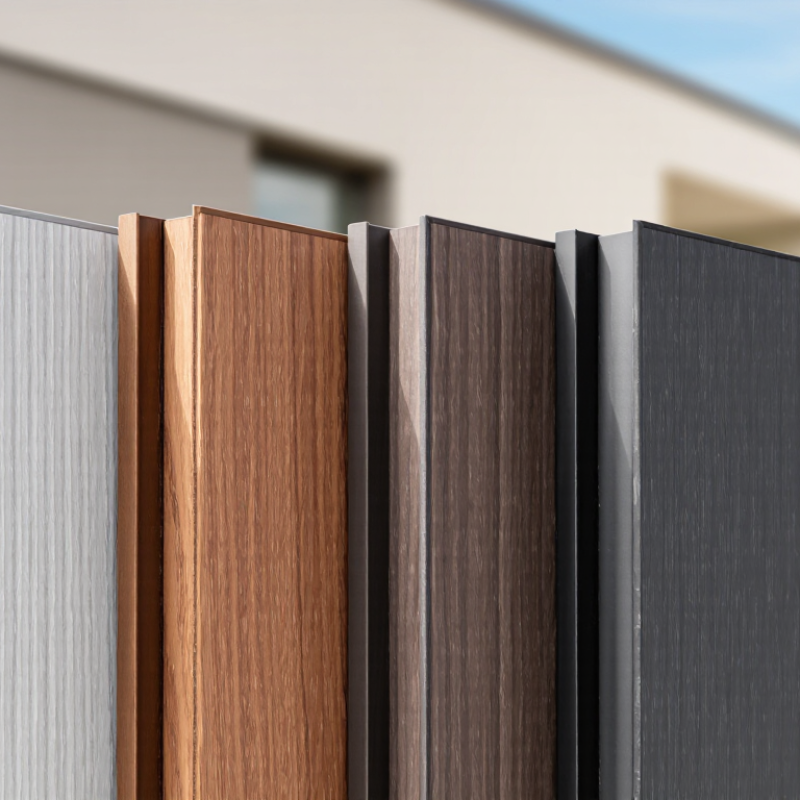
The mixture is heated, extruded, and shaped into panels with a consistent profile. Some surfaces imitate oak grain, while others have a fine, modern texture.

Not solid wood. They are also different from ordinary plastic siding.

In practical projects, these panels can cover exterior walls, balconies, garden buildings, and selected interior spaces. Their polymer content helps reduce water absorption, cracking, and insect damage.

However, resistance depends on the formula, density, surface coating, and installation quality. WPC is not automatically waterproof or fireproof.

Buyers should request test data for water absorption, slip or surface performance, flame behavior, UV stability, and dimensional change.

Installation needs room for thermal movement. Panels may expand under strong sunlight, especially on dark façades.

A reliable system normally includes suitable clips, corrosion-resistant fasteners, ventilation gaps, and a level supporting frame.

Cutting can produce fine dust, so installers should use eye protection and proper extraction.

They are not maintenance-free. That assumption causes trouble.

Dust, algae, and stains still need occasional cleaning with mild detergent.

A careful buyer should compare the actual panel composition, thickness, weight, color consistency, and warranty terms.

Samples are useful, but one small sample cannot reveal long-term fading. I would inspect a completed project, check the joint details, and ask how replacement panels are matched.

Small details matter.

Key Materials and Features of WPC Wall Cladding

WPC wall cladding combines wood fiber with a thermoplastic polymer, often polyethylene or PVC. The wood component adds texture and rigidity. The polymer improves moisture resistance and dimensional stability. Mineral fillers and stabilizers may also improve stiffness, color retention, and processing control.

Material balance matters. Too much wood can increase moisture movement. Too much polymer may create a plastic appearance. A textured surface helps, but it cannot hide poor extrusion. In practical inspections, installers should check panel density, edge consistency, and surface adhesion. Small gaps are necessary because panels expand with temperature changes. They should not be forced tightly against corners.

Many panels use a capped surface layer for improved UV and stain resistance. This layer is useful near sunny façades, but it is not indestructible. Harsh cleaners, standing water, or incorrect fasteners can still damage the finish. Fire performance also varies by formula and must be verified through current test reports. Do not rely on general claims.

For global buyers, check recycled content, color consistency, impact strength, and installation tolerances. Ask for technical data, maintenance guidance, and sample testing. A sample may look excellent under showroom lighting. Field conditions can expose weaknesses. That is worth remembering.

Types and Design Options for Global Buyers

China Best WPC Wall Cladding Panels for Global Buyers?

WPC wall cladding panels come in several practical types. Hollow panels reduce weight and suit ventilated façades. Solid panels offer stronger impact resistance for busy commercial areas. Co-extruded panels add a protective outer layer, helping resist moisture, stains, and color fading. Choose carefully.

Design options range from narrow slats to wide boards and decorative 3D surfaces. Wood-grain finishes create a warm appearance around villas, hotels, and balconies. Stone, concrete, and plain matte textures suit modern offices. Dark colors look elegant, but they may show dust and heat more clearly. That detail matters.

Panel profiles also change the final effect. A hidden-clip system creates clean lines, while overlap edges give walls deeper shadows. Check panel dimensions, expansion gaps, fire performance, and installation instructions before ordering. Humid climates need reliable drainage behind the cladding. Cold regions require attention to thermal movement. In project reviews, I have seen attractive designs fail because installers ignored these small gaps. It is not always the panel’s fault. Samples should be tested beside local sunlight, masonry, and trim before bulk production. Color screens can mislead. Suppliers should provide technical data, packaging details, and consistent quality records for dependable international purchasing.

How to Evaluate WPC Cladding Suppliers in China

China’s WPC wall cladding market attracts global buyers because demand is growing. Grand View Research forecasts an 11.4% CAGR for global WPC from 2023 to 2030. Growth alone proves little. Supplier evaluation matters more.

Request the formulation range, not only “eco-friendly” claims. Confirm wood-fiber content, polymer type, additives, and moisture limits. Ask for EN 15534 or ASTM-based test reports covering water absorption, flexural strength, impact, and dimensional stability. A reliable supplier should provide batch numbers and traceable production records. Check whether laboratory results match your exact profile, surface finish, and color.

Inspect the factory remotely or in person. Look at extrusion lines, storage conditions, and calibration records. Ask for samples from three production batches. Place them outdoors for several weeks, then compare warping, fading, and surface chalking. I have learned that a perfect sample can hide unstable production. That risk is easy to underestimate. Request accelerated weathering data, but do not treat it as a complete substitute for field exposure. Also verify fire classification for the target market, because local building rules differ. ISO 9001 certification can support process control, but it does not guarantee attractive, durable panels. Compare warranty terms, packaging strength, replacement procedures, and response times before signing. Small details often reveal operational maturity.

Installation, Maintenance, and Export Considerations

For global buyers, WPC wall cladding should be judged beyond color and price.

Grand View Research valued the global wood plastic composites market at about USD 7.3 billion in 2023. Its 2024 assessment projects strong growth through 2030. This growth increases supplier choice, but not necessarily product consistency. Ask for density, moisture absorption, fire performance, and batch test records.

One attractive sample is not enough.

Installation needs a dry, level substrate and a ventilated cavity. Leave movement gaps at joints, corners, and window edges. Follow the supplier’s fixing schedule, especially in hot coastal climates. ASTM D7031 provides useful guidance for evaluating WPC performance, although it is not a complete installation manual.

Site teams often underestimate expansion. That mistake becomes visible around screws and trims.

Maintenance is usually simple. Wash dust with mild detergent and water; avoid harsh solvents and abrasive pads. Inspect fasteners, drainage paths, and dark-stained areas twice yearly.

For export, confirm packaging strength, moisture protection, pallet dimensions, and destination fire documentation. ISPM 15 may apply to solid-wood packaging, not automatically to the WPC panels. European projects may also require evidence under applicable construction-product rules.

Market reports describe opportunity, not compliance. I would request third-party testing, traceable production records, and a small installation trial before committing to a full container. Bulk savings can disappear after rework.

FAQS

What are WPC wall cladding panels made from?

They combine wood fibers, polymer resin, and performance additives. Heat forms the mixture into consistent panels. They are not solid wood.

Where can WPC wall cladding panels be used?

They suit exterior walls, balconies, garden buildings, and selected interior areas. They can create an oak-like surface or a fine modern texture.

Are WPC panels completely waterproof and fireproof?

No. Performance depends on composition, density, coating, and installation. Ask for water absorption, flame behavior, UV stability, and dimensional-change test results.

What installation details are important?

Use a dry, level supporting frame and a ventilated cavity. Leave movement gaps near joints, corners, and windows. Dark panels need extra attention.

Why do panels need movement gaps?

Strong sunlight can make panels expand, especially on dark façades. Without space, screws, trims, and joints may distort. Small gaps prevent bigger repairs.

How should WPC cladding be cleaned and inspected?

Wash dust with mild detergent and water. Avoid harsh solvents and abrasive pads. Inspect fasteners, drainage paths, algae, and stains twice yearly.

What should buyers check before placing a large order?

Compare thickness, weight, density, color consistency, and warranty terms. Request batch records and independent test evidence. A small sample can mislead.

What export details deserve attention?

Check packaging strength, moisture protection, pallet dimensions, and destination documentation. Confirm wooden packaging requirements separately. Bulk savings may vanish after rework.

Conclusion

WPC wall cladding panels are exterior and interior decorative materials made from a blend of wood fibers, polymers, and performance additives. This composition combines the natural appearance of wood with improved resistance to moisture, insects, cracking, and daily wear. For global buyers, Wall Cladding Wpc Wall Panel products are available in various profiles, surface textures, colors, lengths, and installation systems, including wood-grain, modern, and minimalist designs. These options can support residential, commercial, and hospitality projects with different architectural styles.

When evaluating suppliers in China, buyers should review material formulas, product consistency, testing documentation, production capacity, packaging standards, customization services, and communication efficiency. It is also important to confirm dimensions, color samples, accessories, minimum order quantities, and delivery schedules before placing an order. Proper installation generally requires a stable substructure, accurate spacing, suitable fasteners, and attention to ventilation and drainage. Routine cleaning with mild water and regular inspections can help maintain appearance and service life, while export planning should include protective packaging, clear specifications, and complete shipping documentation.


Aria

Aria

Aria is a dedicated marketing professional with a deep passion for innovative strategies and a keen understanding of our company's product offerings. With a wealth of experience in the industry, Aria excels at crafting engaging content that highlights the unique features and benefits of our......