WPC Wall Panel Interior Decoration is moving from a niche finish to a practical choice for homes, hotels, and commercial spaces. Grand View Research estimated the global wood-plastic composites market at USD 7.4 billion in 2023 and projected an 11.5% compound annual growth rate from 2024 to 2030. That figure covers the wider WPC market, not wall panels alone, so it signals industry momentum rather than guaranteed demand for every product.
Behind the market numbers is a tactile design decision. A panel may need to sit neatly beside a door frame, resist everyday scuffs, and keep its color under warm ceiling lights. WPC products vary in core composition, surface finish, profile, and installation method. Those differences affect appearance, maintenance, and suitability for a particular room. A low price is not the whole story.
This guide compares ten WPC wall panel options for interior decoration, focusing on material details, visual style, and practical selection points. It also separates manufacturer claims from information buyers can verify, such as published specifications and care instructions. A verified named-expert quotation was not available for this introduction, so no quotation has been invented. That matters. Buyers deserve clear evidence, not confident-sounding words without a source.
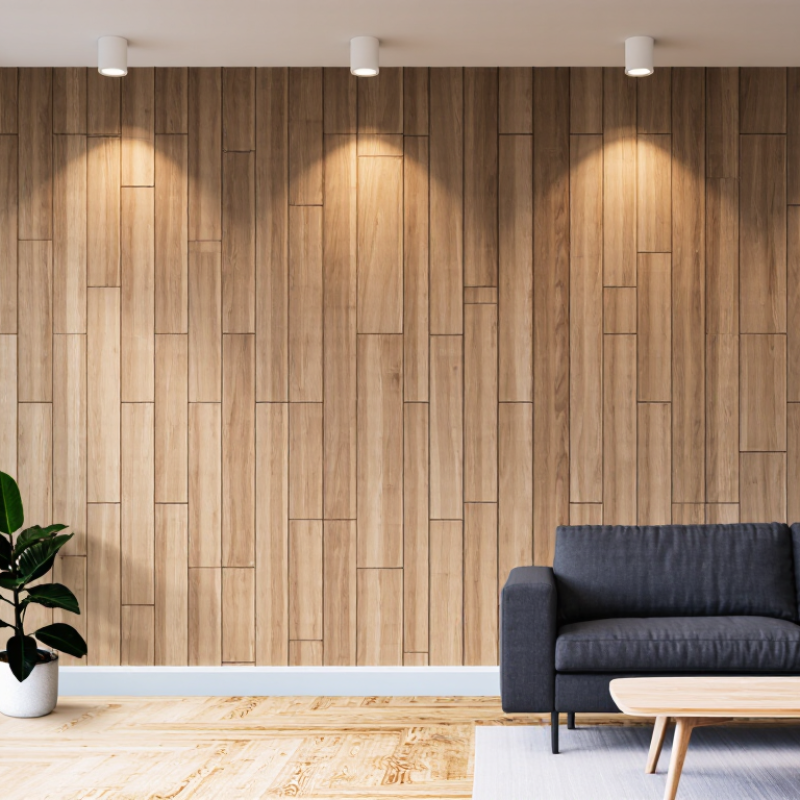
WPC wall panels combine wood fibers or flour with thermoplastics, often polyethylene or PVC, plus small amounts of processing additives. They are not simply wood with a plastic coating. A Forest Products Journal review by C. M. Clemons (2002) describes many WPC formulations as using roughly equal parts wood flour and plastic, although recipes vary by product and purpose. That balance shapes panel weight, stiffness, surface texture, and resistance to moisture.
Small details matter.
Manufacturing usually begins with drying and screening the wood particles, then blending them with melted polymer, pigments, and stabilizers. The compound is pushed through a shaped die, cooled, and cut into panels; embossing or lamination may add a grain-like finish.
For interior use, consistent particle size and controlled cooling help reduce visible warping and uneven edges. But extrusion does not make every panel identical. A tight corner can reveal a small gap, and installation still needs room for movement as temperature changes.
Check product-specific technical data for dimensions, fixing methods, and suitable indoor conditions rather than assuming all WPC panels perform alike.
China Top 10 WPC Wall Panels for Interior Decoration?
Key Criteria for Choosing Interior WPC Wall Panels in China
Choosing interior WPC wall panels in China starts with the room, not the catalogue. A bathroom vanity area needs better moisture resistance than a dry bedroom wall. Check the panel’s stated composition, dimensions, surface finish, and care instructions. Ask for recent test documents, including formaldehyde-emission results and fire-performance information relevant to your project. Ask for evidence. A glossy sample may look even under showroom lights but show scratches and dust more clearly at home.
Compare samples from the same production batch when possible. Look for chipped edges, uneven color, and a hollow sound when tapping the panel. Confirm how panels are fixed, whether trims are included, and how much expansion space installation requires. Small details matter. Request a written quotation that separates panel, accessory, delivery, and installation costs. Clarify what the warranty covers and how defects are handled. A minor inconsistency between samples and delivered panels can be frustrating, and it is easy to overlook during selection. Review one full-size sample in the room’s actual lighting before ordering.
Suggested buyer-priority scores for comparing interior wall panels (1 = lower priority, 5 = higher priority).
Priorities are an editorial evaluation framework, not product test results or a market ranking. Verify performance claims, indoor-air emissions documentation, installation requirements, and warranty terms for each product.
China’s top 10 WPC wall panel choices are better viewed as practical styles, not a verified sales ranking. They include embossed oak, walnut, pale ash, matte flat panels, narrow grooves, wide slats, stone-look surfaces, moisture-resistant cores, recycled-content boards, and clip-fit modules. Each creates a different effect. A narrow-groove panel can make a small entryway feel taller, while dark walnut may make a dim corridor feel smaller. Check samples under the room’s actual lighting; online color images can mislead.
Grand View Research estimated the global wood-plastic composites market at US$7.49 billion in 2023 and forecast an 11.5% compound annual growth rate from 2024 to 2030. This figure covers WPC products broadly, not interior wall panels alone, so it signals market activity rather than panel quality. For a China-made panel, compare the stated wood-fiber and polymer content, surface-layer adhesion, edge finish, and installation instructions. Ask for test reports on relevant performance, including moisture resistance and emissions, and confirm which product the report covers. Details matter. A textured sample may look convincing but collect dust in deep grooves; I would inspect and clean a full-size piece before specifying it.
WPC wall panels differ in profile, surface texture, and core density. Narrow slats add vertical emphasis to low ceilings, while broad boards create quieter walls in bedrooms and living rooms. Deep grooves collect dust more readily; smooth, sealed faces are easier to wipe. The choice is not purely aesthetic. Grand View Research valued the global wood-plastic composites market at about US$7.4 billion in 2023 and projected 11.5% annual growth through 2030. That figure covers many products, not interior panels alone, so it signals wider material demand rather than guaranteed panel quality.
For kitchens and busy hallways, compare the manufacturer’s moisture and stain test results, edge sealing, and cleaning instructions. A textured panel can disguise small marks, but grease may settle in its grooves. Bedrooms and study areas usually suit lighter, flatter profiles, which are simpler to dust. Bathrooms need extra caution: WPC is not automatically waterproof, especially at cut edges or joints. Check the installation details. Also confirm fire-test documentation for the exact panel assembly; performance can change with thickness, backing, and fixings. One imperfect point: product labels rarely make comparisons easy. Ask for test methods and results, not just broad claims such as “water-resistant.”
This comparison covers ten common WPC (wood-plastic composite) wall-panel styles available in the market, rather than ranking specific manufacturers or brands. Specifications and performance vary by product, installation method, and local regulations; confirm the technical data for the exact panel before purchase.
| Rank | Panel Design | Typical Appearance and Format | Typical Construction | Performance Considerations | Suitable Rooms | Best Use and Limitations |
|---|---|---|---|---|---|---|
| 1 | Wood-grain slat panel | Parallel narrow ribs with a printed or embossed wood-look finish; often supplied as a wide panel or as individual slats. | WPC body with a decorative surface layer; profile depth and backing vary by model. | Adds visual texture and may soften room reflections slightly. Dust can collect between ribs, so regular cleaning is needed. | Living rooms, bedrooms, studies, reception areas | Well suited to feature walls and TV backdrops. Not intended to provide structural support or acoustic isolation by itself. |
| 2 | Flat wood-look panel | Broad, smooth boards with oak-, walnut-, or other wood-inspired patterns. | Flat WPC boards or sheets with a printed, laminated, or coated decorative finish. | Creates a relatively calm, continuous surface and is generally easy to wipe. Pattern repetition may be visible across large areas. | Bedrooms, living rooms, hallways, home offices | A practical option for understated interiors. Check color samples under the room’s actual lighting before ordering. |
| 3 | Marble-look panel | Large-format panels printed with stone-like veining, usually with a smooth or lightly textured finish. | WPC substrate with a decorative film or surface coating. | Has fewer visible joints than small-format tile when installed in large sections. The finish is decorative and does not have the hardness of natural stone. | Entryways, living rooms, dining areas, dry vanity walls | Useful for a stone-inspired feature wall. Protect the surface from sharp impacts and follow the manufacturer’s cleaning guidance. |
| 4 | Matte solid-color panel | Uniform color with a low-sheen finish; available in neutral and accent shades. | WPC board with a colored surface layer or coating. | Low sheen can reduce glare. Dark or very light finishes may show dust, fingerprints, or scuffs more readily depending on the surface texture. | Bedrooms, offices, hallways, contemporary living spaces | Works well with minimalist interiors and mixed-material designs. Keep spare panels or confirm future color availability for repairs. |
| 5 | Grooved linear panel | Regular shallow or deep grooves create a vertical or horizontal lined effect. | Extruded or molded WPC profile, with groove spacing and profile dimensions varying by product. | Provides a strong visual rhythm. Grooves can make dust removal more time-consuming than on flat panels. | Hallways, reception areas, living rooms, bedroom accent walls | Vertical lines can emphasize room height; horizontal lines can emphasize width. Confirm how edge trims and corners will be finished. |
| 6 | Stone-texture panel | Textured surface designed to resemble slate, concrete, or other stone finishes. | WPC core with an embossed or coated decorative face. | Offers a textured look without the weight of a stone finish. Deep textures may collect dirt and are harder to clean than smooth surfaces. | Living rooms, entryways, dining areas, commercial feature walls | Best as a decorative accent. Texture, color variation, and panel joints should be checked using physical samples. |
| 7 | High-gloss decorative panel | Smooth, reflective surface in solid colors or printed patterns. | WPC substrate with a glossy decorative coating or film. | Reflects light and is easy to wipe when the surface is intact. Scratches and fingerprints can be more noticeable than on matte finishes. | Dining areas, dry kitchen walls away from heat, retail interiors | Choose a finish suited to expected contact and cleaning. Keep away from direct flame and high-heat sources unless the product is specifically approved for that use. |
| 8 | Wide-board panel | Broad plank-style boards that create a simple, spacious visual effect with fewer seams than narrow boards. | WPC boards with joining edges or a trim-based installation system. | Fewer joints can simplify visual continuity. Large panels still need proper support, expansion allowance, and suitable installation conditions. | Living rooms, bedrooms, corridors, office walls | Suitable for larger wall areas. Wall flatness and the specified fixing method affect the final appearance. |
| 9 | Mixed-width or staggered-board panel | Boards of different widths or staggered joints create a more varied, layered pattern. | Multiple WPC board sizes or a pre-arranged panel system; exact layout depends on the product. | Can disguise a repetitive layout, but installation requires careful alignment and planning to keep joints consistent. | Living rooms, feature walls, boutique interiors, reception spaces | Offers a distinctive decorative effect. Allow extra time for layout and cutting, and check that matching trims are available. |
| 10 | Lightweight hollow-core panel | Typically a plain, grooved, or wood-look panel designed with a hollow profile to reduce material weight. | Hollow or cellular WPC profile; wall thickness and internal structure vary by specification. | Lower weight can make handling easier. Resistance to impact and the ability to hold fixtures depend on the panel design and fixing points. | Bedrooms, hallways, rental interiors, low-impact decorative applications | Appropriate for decorative wall coverage when installed as specified. Heavy shelves and cabinets should be fixed to suitable wall framing, not just the panel. |
Selection note: WPC wall panels are not automatically waterproof, fire-rated, or soundproof. For bathrooms, kitchens, public buildings, or other regulated spaces, verify the product’s installation instructions, moisture suitability, fire-test documentation, and any required local approvals. Avoid using ordinary interior panels inside showers or in direct contact with standing water unless the manufacturer expressly approves that application.
Good results start with a dry, stable wall. Check for damp patches, loose plaster, and uneven areas before fitting the panels. Let the panels adjust to the room’s temperature and humidity, following the supplier’s instructions. Use a level to keep the first panel straight; a small tilt can become obvious across the wall. Leave the specified expansion space at edges and around fixed fittings. Small gaps matter. Secure panels to suitable battens or a sound substrate, and avoid covering an unresolved moisture problem.
For routine care, wipe the surface with a soft cloth and diluted mild detergent, then dry it. Dust collects in grooves and near skirting boards, so check these spots during regular cleaning. Skip abrasive pads, strong solvents, and excessive water; they may dull or damage the finish. Test any cleaner on a discreet area first.
Long-term performance depends on the room as much as the panel. Keep indoor humidity reasonably steady, and avoid prolonged contact with heat from radiators or appliances. Inspect joints and edges every few months. If a seam opens, look for movement or moisture before adding more adhesive. A repair can hide the symptom, not the cause. WPC panels are decorative surfaces, not a substitute for correcting leaks or choosing a suitable wall system.
They combine wood fibers or flour with thermoplastics and small amounts of processing additives. Some recipes use roughly equal parts wood and plastic. Formulas vary.
Wood particles are dried and screened, then blended with melted polymer, pigments, and stabilizers. The mixture passes through a shaped die, cools, and is cut. Some panels receive an embossed or laminated finish.
No. Check the panel’s technical details for dimensions, fixing methods, and suitable indoor conditions. Assuming every panel behaves alike can lead to trouble.
Make sure the wall is dry, stable, and reasonably even. Look for damp patches or loose plaster. Do not cover a moisture problem.
Panels need the specified expansion space as room temperature changes. Leave room around edges and fixed fittings. Small gaps matter.
Wipe them with a soft cloth and diluted mild detergent, then dry the surface. Dust can collect in grooves and beside skirting boards. Test cleaners discreetly.
Abrasive pads, strong solvents, and excessive water may dull or damage the surface. Prolonged heat from a radiator or appliance can also affect performance.
Check for movement or moisture before adding adhesive. A quick repair may hide the symptom, not the cause. I would inspect the wall carefully first.
This guide explains what WPC wall panels are, how wood-plastic composite materials are made, and why they are used for indoor surfaces. It outlines the main factors to consider when choosing panels in China, including material quality, appearance, durability, moisture resistance, maintenance needs, and suitability for different rooms. The overview of China’s top 10 options focuses on general panel types and design features rather than brand names, helping readers compare finishes and performance.
It also considers how panel patterns, textures, and practical properties can suit spaces such as living rooms, bedrooms, and hallways. The final sections cover basic installation considerations, routine cleaning, and ways to support long-term use. Together, these topics provide a practical starting point for planning Wpc Wall Panel Interior Decoration and selecting an interior finish that balances style, function, and care requirements.

Xiuchen