Top 10 WPC Indoor Wall Cladding Manufacturers?

Time:2026-09-19 Author:Sienna
0%

Choosing the right Wpc Indoor Wall Cladding manufacturer affects more than a room’s appearance. It influences installation time, surface durability, maintenance, and long-term indoor comfort. This guide reviews ten manufacturers connected with the growing WPC interior wall panel market.

The comparison considers product quality, material consistency, design range, production experience, and customer support. It also examines panel thickness, surface texture, moisture resistance, installation systems, and available color options. A reliable manufacturer should provide clear technical data, realistic product photographs, and samples that match delivered panels. Certifications and safety documentation deserve careful attention, especially for hotels, offices, and residential projects.

Practical details matter.

A good panel should fit cleanly around corners, sockets, and door frames. Its surface should remain stable under normal indoor temperature changes. Warranty terms should also explain what is covered and what is not. This protects buyers from vague promises.

The selected companies may serve different markets and project sizes. Some focus on decorative panels, while others offer broader interior finishing systems. Their strengths are not identical, so the “best” choice depends on your budget, design goals, installation team, and local supply conditions. No ranking is flawless. Product lines change, and online information can become outdated. Buyers should request current samples, factory details, testing documents, and quotations before making a final decision. This review offers a practical starting point, not a substitute for project-specific evaluation.
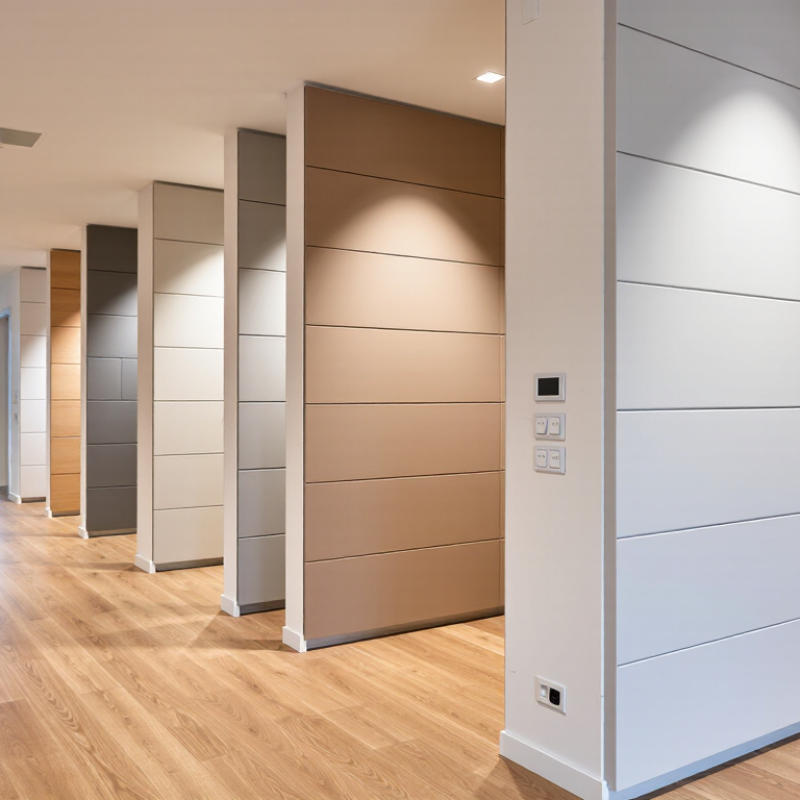
Top 10 WPC Indoor Wall Cladding Manufacturers?

WPC Indoor Wall Cladding: Materials, Features, and Applications

WPC indoor wall cladding combines wood fibers with thermoplastic resin and performance additives. The result is a stable panel with a warm, textured appearance. Unlike untreated timber, it resists routine moisture and does not require frequent painting. However, it is not completely waterproof. Poor ventilation can still cause staining, swelling, or hidden mold behind the panels.

In apartments, hotels, offices, and retail interiors, WPC panels can create feature walls, reception backgrounds, corridor finishes, and ceiling accents. Their lightweight structure supports faster installation, while concealed clips can produce clean lines. Good manufacturers should provide test data for formaldehyde emissions, fire performance, dimensional stability, and surface wear. Color consistency matters too. A sample may look excellent, yet a larger batch can reveal slight shade differences. That detail deserves attention.

Tips: Check the wall for moisture before installation. Leave expansion gaps around corners and openings. Choose low-emission materials for bedrooms and children’s areas. Match the panel texture with lighting, because deep grooves can collect dust. Ask for installation instructions and a maintenance guide. Do not rely only on attractive photographs. They often hide edge finishing and joint quality. I have found that a modest sample test prevents expensive rework, although it cannot replace professional site assessment.

This chart presents an indicative 0–100 performance index for WPC indoor wall cladding based on commonly recognized material characteristics. WPC generally offers strong moisture resistance, dimensional stability, low-maintenance performance, and design flexibility, while acoustic and fire performance depend on the specific panel structure, additives, and certification.

Key Criteria for Evaluating WPC Wall Cladding Manufacturers

Choosing among the top 10 WPC indoor wall cladding manufacturers requires more than comparing catalog prices. Material performance, production discipline, and after-sales support often decide whether a wall remains stable. Request physical samples, not only digital brochures. Check panel density, edge finish, surface uniformity, and color consistency under warm lighting. Ask how the manufacturer controls moisture during storage and production. Small variations can become visible across a large feature wall.

Technical evidence should be specific and traceable. Review independent test reports for fire behavior, formaldehyde or VOC emissions, moisture resistance, and dimensional stability. Confirm the tested product matches the proposed profile, thickness, and surface treatment. Generic certificates are weak evidence. A capable manufacturer should explain installation gaps, adhesive compatibility, cleaning limits, and repair procedures. Clear tolerances matter. Ask for batch records and quality checkpoints. If answers remain vague, pause before placing a large order.

Reliability also appears in factory capacity and communication. Evaluate production equipment, packaging methods, lead-time history, and replacement policies. Request references from comparable indoor projects, preferably with photographs taken after occupancy. Warranty language deserves careful reading. It should identify exclusions, response times, and responsibility for defective panels. Recycled content can strengthen a specification, but traceable sourcing matters more than attractive claims. Cost still matters. Yet a cheaper panel may create extra labor through warped edges, mismatched batches, or difficult cutting. No evaluation is perfect; even a strong sample may not reveal long-term color change. That uncertainty deserves a documented pilot installation before full procurement.

Top 10 WPC Indoor Wall Cladding Manufacturers

Choosing among the top 10 WPC indoor wall cladding manufacturers requires more than comparing photographs. WPC combines wood fiber and polymer, so moisture resistance, density, fire behavior, and surface stability deserve testing. Recent estimates from Grand View Research and Fortune Business Insights place the global WPC market near US$7 billion around 2023–2024. However, those figures include decking, automotive parts, and furniture components. They do not represent indoor cladding alone. Treating them as a direct wall-panel forecast would be careless.

A reliable top-ten assessment should examine technical datasheets, batch consistency, installation records, and independent laboratory reports. Check dimensional change after humidity cycling, screw-holding strength, formaldehyde emissions, and fire classification. ASTM E84 or EN 13501-1 references can help, but only when the tested panel matches the supplied core and finish. Manufacturers should disclose recycled content and backing materials clearly. Low prices may hide thinner profiles or weak locking systems. Attractive samples can still fail at joints. One showroom test is never enough.

Tips: Request three samples from different production batches. Measure thickness, color variation, and edge squareness. Ask for installation guidance and cleaning limits. Confirm local code acceptance before specifying panels. Keep spare pieces; later repairs rarely match perfectly. A ranking should guide questions, not replace site testing.

Manufacturer Comparison: Products, Quality, Customization, and Service

Top 10 WPC Indoor Wall Cladding Manufacturers?

A defensible top-ten comparison should begin with evidence, not showroom gloss. Grand View Research valued the global WPC market at about USD 7.1 billion in 2023. Its outlook indicates continued growth through 2030. MarketsandMarkets forecasts expansion from roughly USD 7.0 billion in 2024 to USD 9.4 billion by 2029. This growth makes supplier screening more important. Compare hollow and solid profiles, recycled content, surface films, fire behavior, moisture resistance, and installation tolerances. Ask for batch records. Reliable manufacturers provide technical datasheets, test methods, and traceable samples. Claims without test conditions deserve caution.

Quality is not merely a smooth texture. Inspect color consistency under warm and cool lighting, joint alignment, edge strength, and screw-holding performance. EN 13501-1 fire classifications, plus relevant ASTM or ISO methods, create a more useful comparison. Yet standards differ by market. Request reports matching the final panel, not a similar laboratory formulation. Customization should cover width, length, embossing, color, acoustic backing, and corner accessories. Check minimum order quantities and tooling charges early. Some factories promise unlimited options, then restrict production volume. That gap matters on real projects.

Service separates a catalog seller from a dependable manufacturing partner. Measure quotation speed, drawing revisions, sample accuracy, packaging design, replacement policy, and installation guidance. A 2024 global supply-chain report identified visibility and supplier collaboration as major resilience priorities. Ask for lead-time data from the previous six months. Do not accept one perfect sample as proof. A factory visit, video audit, or third-party inspection adds practical confidence. Still, even a careful top-ten ranking remains subjective. Project fit changes everything.

Top 10 WPC Indoor Wall Cladding Manufacturers? - Manufacturer Comparison: Products, Quality, Customization, and Service

Rank Anonymous Manufacturer Main WPC Indoor Cladding Products Typical Panel Sizes Surface Finishes Moisture Performance Fire-Test Documentation Quality-Control Focus Customization Capability Typical Lead Time Service Strength
1 Manufacturer Profile 01 Hollow and solid WPC wall panels, slatted acoustic-style panels, matching trims 150–219 mm width; 21–29 mm thickness; custom lengths available Wood-grain embossing, matte, brushed, co-extruded protective layer High; suitable for kitchens, offices, and dry-to-moderately humid interiors Fire classification available by project and market; test report should be requested Profile consistency, color tolerance, moisture conditioning, packaging inspection High; colors, embossing, lengths, trims, private labeling, and packaging 20–35 days Strong technical support and export documentation
2 Manufacturer Profile 02 Decorative fluted panels, wall boards, corner profiles, ceiling-compatible systems 159–200 mm width; 22–26 mm thickness; standard lengths up to approximately 3 m Deep fluting, oak and walnut patterns, painted and laminated surfaces High; low water absorption when edges are properly sealed Project-specific testing; fire performance depends on formulation and surface layer Density, dimensional stability, surface adhesion, visual inspection High; custom colors, groove spacing, panel length, and accessory matching 25–40 days Good sampling, layout assistance, and installation guidance
3 Manufacturer Profile 03 Co-extruded WPC panels, high-wear decorative boards, commercial interior systems 145–210 mm width; 18–28 mm thickness; fixed and cut-to-length options Scratch-resistant film, realistic wood texture, satin and low-gloss options High; protective cap improves stain and humidity resistance Available test documents vary by product line and destination country Co-extrusion bonding, abrasion resistance, color consistency, batch traceability Medium to high; surface film and color development usually require minimum quantities 30–45 days Strong for high-traffic commercial applications
4 Manufacturer Profile 04 Budget WPC wall panels, basic slatted boards, residential decorative profiles 150–195 mm width; 20–25 mm thickness; mainly standard lengths Embossed wood grain, printed veneer effect, matte finish Moderate to high; not intended for prolonged water exposure Documentation should be verified before use in regulated projects Basic dimensional checks, color inspection, packing and loading control Medium; standard colors are more economical than new formulations 15–30 days Competitive pricing and flexible small-batch sourcing
5 Manufacturer Profile 05 Fire-oriented WPC interior panels, hotel and public-building wall systems 160–220 mm width; 23–30 mm thickness; engineered substrate options Fire-rated decorative laminates, wood texture, micro-groove profiles High; installation details remain important for joint protection More extensive fire-test support; confirm the exact assembly and standard Fire formulation, smoke development, density, dimensional stability Medium; custom finishes generally require technical approval and minimum order quantities 35–55 days Strong compliance support for commercial projects
6 Manufacturer Profile 06 Acoustic-look fluted panels, felt-backed decorative systems, residential feature walls 140–200 mm width; 20–27 mm total thickness including backing Deep grooves, recycled-felt backing, natural and dark wood tones Moderate to high; backing and adhesive must be protected from moisture Usually limited to panel components; full-system testing must be confirmed Groove accuracy, felt bonding, color matching, flatness, packaging protection High; groove patterns, felt colors, lengths, edge details, and project kits 20–40 days Good design assistance and sample-board support
7 Manufacturer Profile 07 Large-format WPC wall boards, seamless-look panels, retail and office interiors 200–600 mm width; 8–18 mm thickness; long-length production available Stone-look, wood-look, plain colors, matte and textured coatings High; sealed joints are recommended in humid interiors Available according to board construction and market requirements Flatness, warpage, coating adhesion, panel-to-panel color uniformity High; board dimensions, decorative patterns, edge machining, and packaging 30–50 days Effective for large-area design and project coordination
8 Manufacturer Profile 08 Eco-focused WPC panels, recycled-content profiles, low-emission interior products 145–210 mm width; 20–28 mm thickness; standard and custom lengths Natural wood texture, water-based color systems, low-gloss finishes High; performance depends on resin, fiber, and additive formulation Request current fire, VOC, and material-content documentation for each line Recycled-content verification, VOC control, batch composition, dimensional checks Medium; sustainable colors and formulations may require minimum quantities 30–50 days Strong sustainability communication and documentation support
9 Manufacturer Profile 09 Interior renovation panels, clip-in wall systems, matching skirting and corner accessories 100–180 mm width; 18–25 mm thickness; modular lengths Embossed, smooth, painted, and printed wood-look surfaces Moderate to high; intended primarily for standard indoor conditions Product-specific documents; verify system performance before specification Click-fit accuracy, clip strength, cut quality, surface consistency Medium to high; modular profiles and accessory combinations are available 18–35 days Useful installation manuals and renovation-oriented support
10 Manufacturer Profile 10 Private-label WPC cladding, mixed profile ranges, distributor-focused product programs Commonly 150–219 mm width; 20–28 mm thickness; standard sizes prioritized Basic wood grain, brushed texture, matte, and selected custom finishes Moderate to high; installation environment and joint sealing are decisive Documentation availability varies; obtain reports for the exact SKU Incoming-material inspection, extrusion control, visual grading, shipment checks High for packaging, labels, cartons, colors, and standard profile adjustments 20–45 days Flexible export service and private-label coordination
Comparison note: WPC wall-cladding performance varies by resin system, wood-fiber content, additives, profile structure, surface layer, and installation method. Fire rating, VOC performance, warranty terms, and moisture resistance should always be verified against the exact product specification and current test documentation.

How to Select the Right WPC Wall Cladding Manufacturer

Selecting the right WPC indoor wall cladding manufacturer requires more than comparing attractive catalogs. Start with the material itself. Request physical samples, product specifications, and recent test reports. Check surface texture, color consistency, panel thickness, and edge accuracy. A glossy sample can mislead. Inspect the reverse side too.

Reliable manufacturers explain their production process clearly. Ask about wood fiber content, resin composition, moisture resistance, and dimensional stability. For interior spaces, confirm applicable fire, indoor-air-quality, and safety documentation for your region. Verify whether reports come from independent laboratories. Do not accept vague claims. A traceable batch number matters.

Project support often separates a capable supplier from a risky one. Ask whether they provide installation drawings, matching trims, fastening guidance, and replacement procedures. Review warranty terms carefully, including exclusions and storage requirements. Contact previous commercial customers when possible. Their walls may reveal details photos hide, such as uneven joints or fading near windows.

Cost still matters, but the lowest quotation may create higher labor expenses. Compare coverage, packaging, lead times, and technical assistance together. A manufacturer may offer excellent panels but weak after-sales service. That is easy to overlook. Allow time for a small trial installation, then check alignment after temperature changes. Even a careful selection process can miss something, so record questions and require written answers before placing a large order.

FAQS

What is WPC indoor wall cladding made from?

WPC combines wood fiber and polymer. This creates panels with moisture resistance and decorative surface options.

Which tests should buyers request?

Request humidity cycling, dimensional change, screw-holding strength, formaldehyde emissions, and fire classification tests. Match reports to the supplied panel.

How can I check sample quality?

Request three samples from different production batches. Measure thickness, color variation, edge squareness, and joint alignment.

Does an attractive sample prove reliable quality?

No. One showroom sample proves very little. Test several batches under warm and cool lighting.

What customization options may manufacturers provide?

Options may include panel width, length, embossing, colors, acoustic backing, and corner accessories. Confirm minimum orders and tooling charges early.

How should moisture resistance be evaluated?

Ask for results after humidity cycling. Check whether edges swell, joints shift, or surfaces warp. Small differences can become obvious later.

Which fire standards may appear in technical documents?

Documents may reference EN 13501-1 or relevant ASTM and ISO methods. Confirm local code acceptance before specification.

What service details deserve attention?

Review quotation speed, drawing revisions, sample accuracy, packaging, replacement policies, and installation guidance. Lead-time records from six months are useful.

Should buyers keep spare panels?

Yes. Keep spare pieces for future repairs. Color matching later is rarely perfect, unfortunately.

Can a top-ten ranking replace site testing?

No. A ranking guides questions, but project conditions change the result. Site testing remains necessary.

Conclusion

Wpc Indoor Wall Cladding is a practical and attractive solution for enhancing interior spaces with a balance of style, durability, and easy maintenance. Made from a wood-plastic composite, it can provide moisture resistance, dimensional stability, sound reduction, and a natural wood-like appearance. These panels are suitable for homes, offices, hotels, retail spaces, and other indoor environments where decorative performance and long-term usability are important.

This article explains how to evaluate the top 10 WPC indoor wall cladding manufacturers by examining material quality, production standards, design options, surface finishes, customization capabilities, installation support, delivery reliability, and after-sales service. It also compares manufacturers according to product range, quality control, technical expertise, and project cooperation. By reviewing these factors together, buyers can identify a dependable supplier that matches their design goals, budget, installation requirements, and expected performance.


Sienna

Sienna

Sienna is a skilled marketing professional with a deep expertise in our company’s core products and services. With a passion for innovation and detail, she plays a pivotal role in crafting insightful blog posts that not only highlight the unique features of our offerings but also provide valuable......