Choosing a wall finish can change how a room feels before you move any furniture. PVC wall panels and wood-plastic composite (WPC) designs offer practical options for homes, offices, and commercial interiors. PVC panels are often lightweight and easy to wipe clean. WPC panels bring a more textured, wood-like appearance. Both come in varied colors, surface patterns, and installation formats, but they are not interchangeable in every setting.
This guide explores popular Pvc Wall Panel Wpc Design ideas, from marble-look sheets and narrow fluted strips to warm timber-effect boards. Picture a pale oak feature wall behind a sofa, or glossy white panels brightening a small hallway. Small details matter. Panel thickness, joint style, room moisture, and substrate condition can affect both appearance and performance. A striking sample may look different across an entire wall, especially under cool lighting.
There is no single best design. Some finishes can show dust or scratches more readily than expected, and printed wood grain may feel less convincing up close. That deserves a careful look. Compare samples in the room where they will be installed, and check the manufacturer’s guidance for cleaning and fitting. Product quality varies, so claims about durability should be weighed against specifications and real installation conditions. The sections ahead help readers compare styles, understand practical trade-offs, and choose a panel design that suits the space—not just the showroom display.
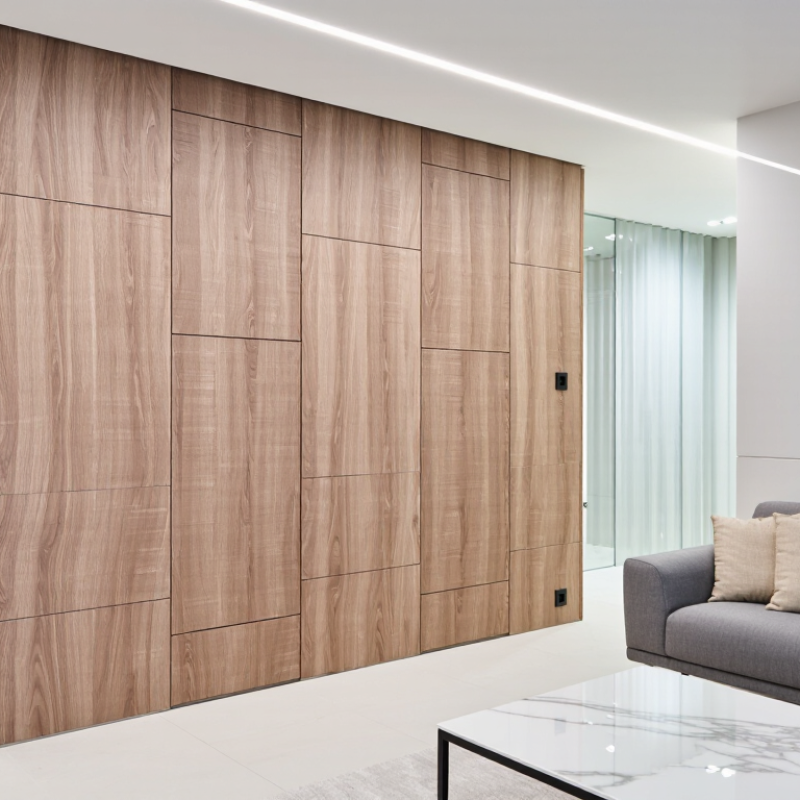
PVC and WPC wall panels look similar, but their materials and internal structures differ. PVC panels use polyvinyl chloride, often formed with hollow channels or a honeycomb core. This design keeps them light and easy to cut. Popular PVC designs include marble patterns, soft stone textures, and narrow fluted lines.
WPC panels combine wood fibers with thermoplastic resin. Many products use a denser, more rigid core, with a woodgrain or grooved surface. The result feels warmer and more furniture-like. It may also provide better impact resistance, depending on thickness and formulation. However, WPC is usually heavier and can cost more. The trade-off is easy to miss.
In humid rooms, PVC resists water well when joints are sealed correctly. WPC can also perform reliably, but exposed edges and poor ventilation may cause swelling or surface changes. Both materials expand with temperature. Leave suitable movement gaps near ceilings, corners, and trims. A small mistake matters. Before installation, inspect the wall for dampness and uneven areas. A bathroom may favor waterproof PVC, while a living room may suit textured WPC. Still, appearance should not decide everything. Check the panel structure, surface coating, fire classification, cleaning method, and installation instructions. Some decorative designs look convincing in a showroom but reveal repeated patterns under strong daylight.
| Design or Feature | PVC Wall Panels | WPC Wall Panels | Typical Uses and Considerations |
|---|---|---|---|
| Material composition | Made primarily from polyvinyl chloride (PVC), with additives that can affect flexibility, color, and impact resistance. | Made from a combination of wood fiber or wood flour and a thermoplastic polymer, often with additional processing additives. | Material formulations vary by manufacturer; check product specifications for composition and intended use. |
| Panel structure | Often formed as lightweight, hollow or cellular panels with interlocking edges. | May be produced as solid or hollow profiles, commonly with a wood-like surface or linear profile. | Profile and thickness influence rigidity, weight, fastening, and installation requirements. |
| Popular design styles | Glossy or matte plain colors, marble-look prints, tile-look patterns, and simple slatted profiles. | Wood-grain finishes, natural-look tones, fluted or slatted profiles, and textured decorative surfaces. | Choose patterns and colors to suit the room’s lighting, scale, and existing finishes. |
| Appearance | Can provide a smooth, uniform finish; printed designs can imitate stone, tile, or other surfaces. | Often selected for a warmer, wood-inspired appearance, though the look depends on the surface finish and profile. | Printed or embossed effects are decorative interpretations, not the same as natural stone or solid wood. |
| Moisture considerations | PVC itself does not absorb water, but joints, edges, and the installation substrate still need appropriate detailing. | Moisture response depends on the wood content, polymer, product construction, and installation conditions. | For wet areas, use products rated for the application and follow the installation and sealing instructions. |
| Cleaning and care | Generally cleaned with a soft cloth and a mild cleaning solution; abrasive tools may damage the finish. | Usually cleaned with a soft brush or cloth and mild cleaner; avoid harsh chemicals unless approved by the supplier. | Always follow the product care instructions and test cleaners on an inconspicuous area first. |
| Installation approach | Common systems use interlocking edges and may be fixed to a suitable, prepared surface or framework. | Installation may use clips, screws, or other specified fixings, depending on the profile and substrate. | Allow for expansion where required, and ensure the surface is sound, level, and suitable for the chosen fixing method. |
| Strengths to compare | Light weight, a wide range of printed finishes, and a non-absorbent base material. | Wood-inspired appearance and profile options, with characteristics that vary according to its formulation. | Compare published specifications rather than relying on material names alone. |
| Key limitations | Can be vulnerable to heat, impact, or surface damage depending on panel thickness and formulation. | May be heavier than some hollow PVC panels; performance and moisture behavior vary between products. | Neither material should be assumed suitable for every location or temperature without checking its rating. |
| Selection checklist | Check panel thickness, surface finish, fire and application ratings, joint design, and cleaning guidance. | Check wood-to-polymer composition where disclosed, profile construction, finish, fixing system, and application ratings. | Confirm dimensions, installation requirements, and suitability for the room before purchasing. |
Narrow vertical grooves draw the eye upward. Their shadows add height without structural changes. It works surprisingly well.
Dark walnut-style shades create a richer mood. However, they can make compact rooms feel heavier. Test a sample first.
Use them behind televisions, beds, desks, or reception counters. They create a mineral appearance without natural stone’s weight. Check the joints closely.
No. Moisture resistance depends on the core, edges, sealing, and ventilation. Protect the wall behind the panel too.
PVC panels suit bathrooms, kitchens, laundry spaces, and utility rooms. They are light, smooth, and easy to clean. Splashes are less worrying.
Uneven walls may show through thin panels. Poor joints become obvious under strong ceiling lights. Missing movement gaps can cause later problems.
View samples in daylight and warm artificial light. Place them beside the actual wall color. Samples can mislead.
Budget for trims, adhesive, cutting, labor, and future repairs. A low panel price may not remain low. That is easy to miss.
Choose a finish that tolerates knocks and frequent cleaning. Matte textures can hide fingerprints and minor marks. Nothing stays perfect.
Review fire-performance documents, installation limits, and local building requirements. Also confirm replacement sections are available. A beautiful wall can still be impractical.
This guide explores the main differences between PVC and WPC wall panels, focusing on their materials, internal structure, durability, moisture resistance, and visual appeal. PVC panels are lightweight, easy to maintain, and available in many patterns, colors, and finishes, including marble effects, wood grain, geometric textures, matte surfaces, and glossy styles. WPC panels combine wood-like character with practical performance, making them suitable for warm, modern, natural, and contemporary interior designs.
The article also explains how to compare panel designs for bedrooms, living rooms, kitchens, bathrooms, offices, and commercial spaces. When selecting a Pvc Wall Panel Wpc Design, readers should consider room conditions, installation requirements, cleaning needs, fire and moisture performance, acoustic expectations, color coordination, budget, and long-term durability. By balancing appearance with function, users can choose wall panels that complement their interior style while providing reliable and attractive surface protection.

 Xiuchen