What Are Timber Veneer Wall Panels?

Time:2026-09-29 Author:Ethan
0%

Timber Veneer Wall Panels bring the visual warmth of natural wood into contemporary interiors. They consist of a thin layer of real timber fixed to a stable backing board. This structure offers authentic grain, controlled dimensions, and more consistent installation than solid wood in many applications. The surface may be oak, walnut, ash, or another species. Each panel still carries individual color variation, knots, and grain movement.

It is a tactile material.

Architect Frank Lloyd Wright once said, “Wood is universally beautiful to man. It is the most humanly intimate of all materials.” That observation explains much of veneer’s appeal. A wall can feel quieter when its surface shows subtle pores, changing tones, and carefully aligned joints. Yet appearance is only part of the decision. Buyers should examine the core material, veneer thickness, fire performance, acoustic backing, moisture resistance, and maintenance requirements. A beautiful sample does not guarantee a suitable wall system.

Installation quality matters greatly. Poorly prepared substrates can create visible gaps or uneven lines. Direct sunlight may also alter the veneer’s color over time. These limitations deserve honest attention. Timber Veneer Wall Panels are not automatically sustainable, either. Responsible sourcing, certified timber, low-emission adhesives, and durable design should be verified through reliable product documentation. This guide explores how these panels are made, where they work best, and what professionals should question before specifying them. Some choices remain subjective. That is part of the material’s character.
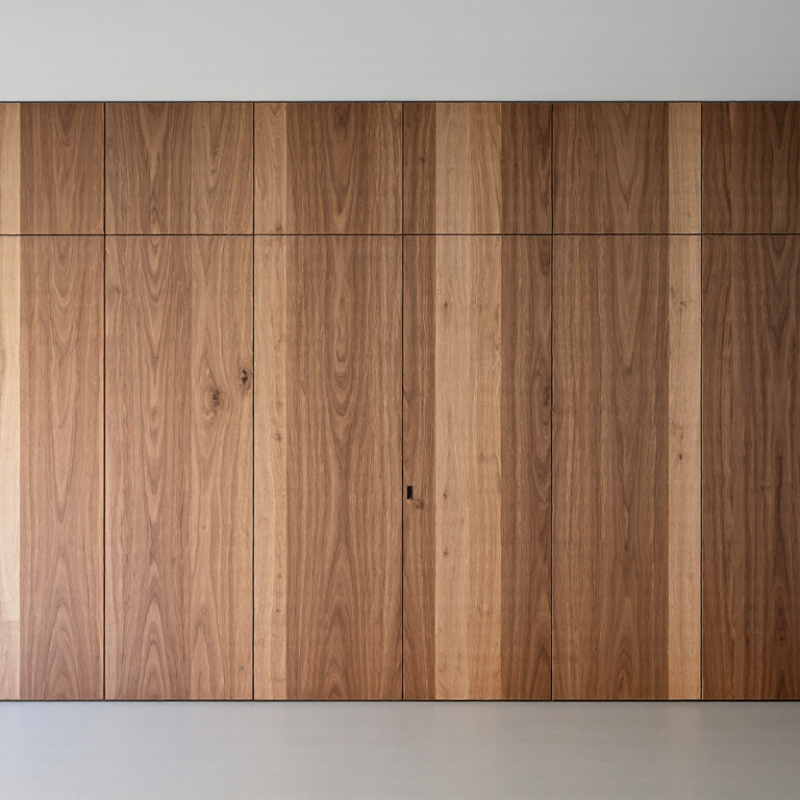
What Are Timber Veneer Wall Panels?

Definition and Basic Structure of Timber Veneer Wall Panels

What Are Timber Veneer Wall Panels?

Definition and Basic Structure of Timber Veneer Wall Panels

Timber veneer wall panels are interior wall coverings made with a thin layer of real wood fixed to a stable backing. The visible veneer provides natural grain, colour, and texture. Unlike solid timber boards, these panels use less wood and usually offer more consistent dimensions.

Their structure normally includes four parts: a timber veneer face, an adhesive layer, a core substrate, and a rear balancing layer. The core may be plywood, medium-density fibreboard, or another engineered board. Some panels also include grooves, acoustic backing, or a protective surface finish. Edges can be square, rounded, or designed to connect with nearby panels.

The term sounds simple, but construction quality varies. A beautiful face does not guarantee a stable panel. In practical specification, check veneer thickness, substrate density, moisture resistance, and formaldehyde emissions. These details affect cutting, fastening, and long-term movement. On site, installers should allow the panels to adjust to indoor temperature and humidity before fitting. The wall must also be dry, level, and structurally sound.

Natural veneer may contain knots, colour shifts, and uneven grain. These are genuine wood characteristics, not necessarily defects. Still, they can appear different from a small sample. That is worth acknowledging. A clear finish can protect the surface, but it cannot make timber maintenance-free. Cleaning methods, direct sunlight, and indoor humidity may gradually change its appearance.

What Are Timber Veneer Wall Panels?

Timber veneer wall panels are engineered panels finished with a thin layer of real wood veneer. Their basic structure typically combines a decorative timber veneer, an adhesive layer, a rigid MDF or plywood core, and a balancing backing layer.

The chart shows representative midpoint thicknesses in millimetres based on common panel construction ranges: the structural core makes up most of the panel, while the real-wood veneer provides the visible finish. Actual dimensions vary according to the substrate, acoustic requirements, and installation system.

How Timber Veneer Wall Panels Are Manufactured

Timber veneer wall panels are made from thin slices of real wood fixed to a stable backing board. The process begins with carefully selected logs. Their grain, moisture level, and natural defects are inspected before cutting. Veneer may be produced by slicing the log into sheets. Different cutting methods create distinct grain patterns and textures.

The sliced veneer is dried under controlled conditions. Excess moisture can cause movement, while over-drying may make the sheets brittle. Workers then grade each piece by color, grain direction, thickness, and visible knots. Matching the sheets takes patience. A perfect match is not always possible. Small differences often reveal the material’s natural character.

The selected sheets are trimmed and joined into larger faces. They are bonded to a substrate, such as a wood-based panel, using a suitable adhesive. A press applies steady heat and pressure, helping the veneer sit flat. After curing, the panel is sanded lightly and finished with oil, lacquer, or another protective coating. Quality checks follow. Technicians inspect edges, surface adhesion, color consistency, and panel flatness. They may also test moisture content before packaging. In practical installations, panels should acclimate indoors before fitting. This step is easy to underestimate. Even well-made panels can react to sudden changes in humidity, so installation conditions deserve careful attention.

Common Types of Timber Veneer Wall Panels

Common Types of Timber Veneer Wall Panels

Timber veneer wall panels vary by how the wood is cut and what supports the surface. Rotary-cut veneer comes from peeling a log in a continuous sheet. Its broad, flowing grain can suit large feature walls, though the pattern may look busy across many panels. Sliced veneer is cut into thin leaves, preserving more of the timber’s natural grain. Plain-sliced leaves often show cathedral shapes; quarter-sliced leaves have straighter, tighter lines. Subtle, but noticeable.

Reconstituted veneer is made from fast-growing timber that is dyed and arranged to create a more consistent grain. It can help maintain a uniform appearance across a project, but it does not have the same one-off markings as natural veneer. Panels may also use different core materials, such as plywood or medium-density fibreboard, which affect weight, stability, and fixing methods. Check the panel specification before installation. Natural veneer can vary between sheets, and direct sunlight may gradually change its colour. A small sample helps reveal both the grain and finish under the room’s actual lighting. Real rooms are rarely as even as catalogues suggest.

Key Benefits and Limitations of Timber Veneer Wall Panels

What Are Timber Veneer Wall Panels?

Timber veneer wall panels use a thin layer of real wood over a stable backing board. They bring natural grain, warmth, and visual depth to interior walls without using solid timber throughout. Each panel can show different knots, colour shifts, and grain patterns. This variation is part of the material’s character, although it may disappoint anyone expecting a perfectly uniform finish.

Key Benefits and Limitations of Timber Veneer Wall Panels

The main benefit is design flexibility. Veneer panels can soften offices, reception areas, bedrooms, and hospitality spaces. They are lighter than many solid-wood systems and can simplify handling during installation. Some backing systems may also improve room acoustics, especially when paired with a concealed cavity or acoustic layer. However, performance depends on the full wall assembly, not the veneer alone.

Timber veneer needs sensible protection. Direct sunlight can gradually change its colour. Excess moisture may cause swelling, lifting, or edge damage, particularly near sinks and poorly ventilated bathrooms. Panels also need accurate measuring because joints can become obvious under strong lighting. Cleaning is usually simple, but abrasive products can mark the surface. A small sample should be checked in the actual room first. Colour can look surprisingly different there.

Tips: Confirm the veneer species, panel backing, fire rating, and moisture suitability before ordering. Keep panels flat and dry during storage. Leave installation to a trained professional when alignment, acoustic control, or concealed fixings matter. A practical detail is often missed: inspect every panel before fitting, because replacement later may not match the original batch.

What Are Timber Veneer Wall Panels? - Key Benefits and Limitations of Timber Veneer Wall Panels

Data Dimension Typical Information Key Benefit Potential Limitation or Consideration
Definition Timber veneer wall panels are engineered panels covered with a thin layer of natural wood veneer. The veneer is commonly bonded to a stable substrate such as medium-density fibreboard, plywood, or another composite board. Provides the appearance of solid timber while using less natural wood. The visual character depends on the veneer species, cut, matching method, and finish quality.
Veneer Thickness Natural wood veneer used for interior panels is commonly about 0.5–1.0 mm thick, although specialty products may use different thicknesses. Uses fewer timber resources than a solid-wood panel of the same size. The thin surface can be damaged by deep scratches, impact, or aggressive sanding.
Common Substrates Typical substrates include MDF, plywood, and other engineered wood boards selected for dimensional stability and panel strength. Engineered substrates can reduce movement caused by changes in humidity compared with solid wood. The substrate affects weight, screw-holding capacity, moisture resistance, and environmental performance.
Appearance Panels can display real wood grain, natural color variation, cathedral grain, straight grain, or book-matched patterns, depending on how the veneer is arranged. Creates a warm, natural, and visually consistent wall finish. Natural variation means that panels may not be perfectly identical in color or grain.
Material Efficiency A veneer surface requires substantially less high-quality timber than a solid-wood panel with the same visible area. Can improve material efficiency and make premium wood species more accessible. Resource efficiency depends on responsible forestry, substrate composition, adhesive selection, and manufacturing waste.
Dimensional Stability Engineered panels generally experience less seasonal movement than solid timber, but they still respond to moisture and temperature changes. Helps reduce visible shrinkage, expansion, and joint movement in stable interior conditions. Panels should be acclimatized and installed according to the manufacturer’s recommended indoor humidity range.
Acoustic Performance Timber veneer panels can contribute to sound absorption or sound diffusion when combined with acoustic backing, perforations, grooves, or open joints. Can improve room comfort and reduce reflected sound when designed as part of an acoustic system. A smooth, solid panel by itself may reflect sound rather than absorb it; acoustic performance is system-dependent.
Thermal Performance Wood has relatively low thermal conductivity compared with metals and masonry, but thin wall veneer panels are not normally a substitute for wall insulation. Adds a warmer tactile surface and may provide a modest improvement in surface comfort. The panel thickness and substrate usually provide limited insulation value compared with dedicated insulation materials.
Moisture Resistance Performance varies according to the veneer, substrate, edge treatment, adhesive, and protective finish. Most standard interior panels are intended for dry indoor spaces. Suitable for many living rooms, offices, bedrooms, reception areas, and other controlled environments. Unsealed edges and prolonged exposure to water or high humidity may cause swelling, staining, delamination, or veneer lifting.
Fire Performance Fire behavior depends on the complete panel construction, including the wood veneer, substrate, adhesive, finish, thickness, and installation method. Some panel systems can be specified with tested fire-performance classifications. Fire ratings cannot be assumed from the presence of wood veneer alone; project-specific test documentation may be required.
Installation Methods Common methods include mechanical fixing, panel clips, battens, adhesive systems, or combinations of these methods. Allows concealed or semi-concealed installation and can support removable wall systems when clips are used. Walls may require leveling, accurate joint planning, expansion allowances, and careful handling during installation.
Maintenance Routine care generally involves dusting with a soft cloth and wiping with a lightly damp cloth when permitted by the finish instructions. Normal cleaning is relatively simple and does not usually require specialized equipment. Abrasive cleaners, excess water, solvents, and direct prolonged sunlight may damage the finish or alter the color.
Repairability Minor surface marks may sometimes be treated or refinished, depending on the veneer thickness and finish. Severely damaged sections may require panel replacement. Individual panels can often be replaced without removing the entire wall installation. Color and grain matching a replacement panel may be difficult after natural aging or exposure to light.
Light Exposure Natural wood can gradually change color when exposed to daylight, especially near windows or under strong artificial lighting. Color changes can contribute to a naturally aged appearance over time. Uneven exposure may produce differences between covered and uncovered areas; window treatments can help reduce this effect.
Environmental Considerations Relevant factors include the source of the timber, certification of responsible forestry, recycled content, adhesive emissions, durability, and end-of-life options. Efficient veneer use and long service life can support a lower-impact interior finish when responsibly specified. Composite substrates and adhesives may complicate recycling, and environmental claims should be verified with project documentation.
Best-Suited Applications Common applications include feature walls, offices, hospitality interiors, educational spaces, residential rooms, corridors, and reception areas. Combines decorative appeal with a practical wall-covering format for many interior settings. Areas exposed to standing water, extreme humidity, heavy impact, or uncontrolled outdoor conditions may require specialized products.

Installation, Care, and Typical Applications

What Are Timber Veneer Wall Panels?

Installation, Care, and Typical Applications

Timber veneer wall panels combine a thin layer of real wood with plywood, MDF, or another stable core. They deliver natural grain without using solid timber throughout the panel. FAO forestry statistics report that global wood-based panel production exceeded 350 million cubic metres in recent years. This scale shows why engineered substrates matter in modern interiors.

Installation conditions

Panels should acclimatise indoors for 48 to 72 hours, following the project specification. Keep indoor humidity near 40–60% when possible. The wall must be flat, clean, and dry.

Installation

Installation needs patience. Installers should leave movement gaps around floors, ceilings, and corners. Adhesive alone may fail on uneven masonry. Mechanical fixing can provide safer support, especially for larger panels. Small mistakes remain visible.

Care and maintenance

Care is simple, but not careless. Remove dust with a soft, dry cloth. Use a lightly damp cloth for marks, then dry the surface immediately. Avoid soaking, abrasive cleaners, and prolonged sunlight. Finishes may change the cleaning method, so the maintenance sheet matters. The honest limitation is that veneer can scratch and fade; it is not indestructible.

Typical applications

Typical applications include reception areas, meeting rooms, restaurants, bedrooms, and residential feature walls. For acoustic control, perforated veneer panels need suitable backing and tested performance. A 2023 environmental product declaration review by the International EPD System also highlights the importance of checking lifecycle data, not only appearance. Beautiful grain is useful. Verified performance is better.

FAQS

What are timber veneer wall panels made from?

They contain a thin real-wood veneer, adhesive, core substrate, and rear balancing layer. The core may use plywood or engineered fibreboard.

How are timber veneer panels manufactured?

Logs are sliced into thin sheets, dried, graded, trimmed, and joined. The veneer is pressed onto a backing board with heat and pressure.

Do all panels have the same grain and colour?

No. Knots, colour shifts, and uneven grain are natural features. Small samples may not show the final variation clearly.

What are the main benefits of timber veneer wall panels?

They add warmth, natural texture, and visual depth. They also use less wood than solid timber boards and usually have consistent dimensions.

Can timber veneer panels improve room acoustics?

Some systems include acoustic backing or a concealed cavity. Acoustic performance depends on the complete wall assembly, not the veneer alone.

Where should timber veneer wall panels not be used casually?

Avoid poorly ventilated, damp areas without suitable protection. Moisture can cause swelling, lifting, or damaged edges near sinks and bathrooms.

How should the panels be stored and prepared before installation?

Keep them flat and dry. Let them adjust indoors before fitting, because sudden humidity changes can cause movement.

How should timber veneer wall panels be cleaned?

Use gentle cleaning methods and avoid abrasive products. Direct sunlight may gradually change the colour, even with a protective finish.

What should buyers check before ordering?

Confirm veneer type, backing material, moisture suitability, fire rating, and emissions information. Inspect every panel before installation, since later replacements may differ.

Is professional installation necessary?

It helps when joints, alignment, acoustic control, or concealed fixings matter. Small mistakes may become obvious under strong lighting.

Conclusion

Timber Veneer Wall Panels are interior wall coverings made by bonding a thin layer of natural wood veneer to a stable core, creating the appearance and warmth of solid timber with improved material efficiency. They are manufactured by selecting and slicing timber, arranging the veneer for a consistent visual pattern, attaching it to a substrate, and applying a protective finish. Common options include panels with natural, reconstituted, or engineered veneer surfaces, as well as smooth, slatted, perforated, or acoustic designs.

These panels can enhance visual comfort, add texture, and support a range of interior styles while using less solid wood. However, they may be sensitive to moisture, impact, sunlight, and installation errors. Proper installation requires accurate measuring, suitable adhesives or fixing systems, and attention to wall conditions. Regular dusting and gentle cleaning help preserve the finish, while controlled indoor humidity can reduce movement. Timber Veneer Wall Panels are commonly used in living spaces, offices, hospitality interiors, educational facilities, and feature walls where a balanced combination of natural character and practical performance is desired.


Ethan

Ethan

Ethan is a seasoned marketing professional with a deep expertise in our company's innovative product line. With a passion for sharing knowledge and insights, he takes the lead in regularly updating our corporate blog, where he explores industry trends, product features, and effective marketing......